
To understand why conversion was so low, I audited the existing post-setup service onboarding experience and uncovered a fragmented journey that worked against user psychology:
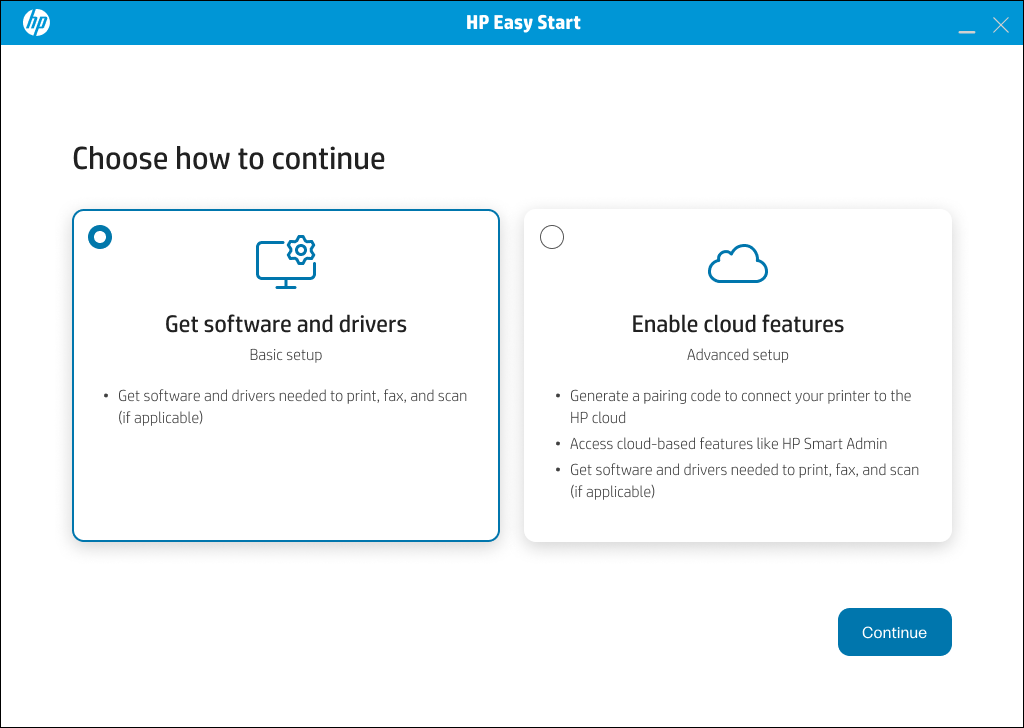
The installer forced users to choose between Basic Setup and Advanced Setup from the start. This created a false dichotomy, implying the two options were mutually exclusive rather than one is an upgrade to the other.
Users have one primary goal of making the printer print. Because the cloud path didn't explicitly promise driver installation, users defaulted to their most familair option to guarantee functionality.
The education on why users should connect was missing. The screen prioritized techinical instructions over user benefits, failing to give users a compelling reason to opt in.
Cloud connectivity as treated a one-time opportunity during setup. If users selected Basic out of caution (which most did), there was no intuitive way to return and cloud onboard later.
Engineering planned for a "Silent Installer" (no UI), which forced us to rely entirely on the Product Setup Page (Web) for cloud opportunity.
I designed the end-to-end web onboarding flow and explored PSW designs to present the cloud option at the right time, leveraging the insight that users are significantly more receptive after the basic driver setup is complete.


During stakeholder review, the technical constraints shifted back to the Legacy Installer. This revealed a critical UX opportunity:
Requires users to physically find the Admin PIN on a label inside the cartridge access door and then enter it back at the computer.
The new model supports Push Authentication within 2 hours of setup, eliminating the PIN step entirely.
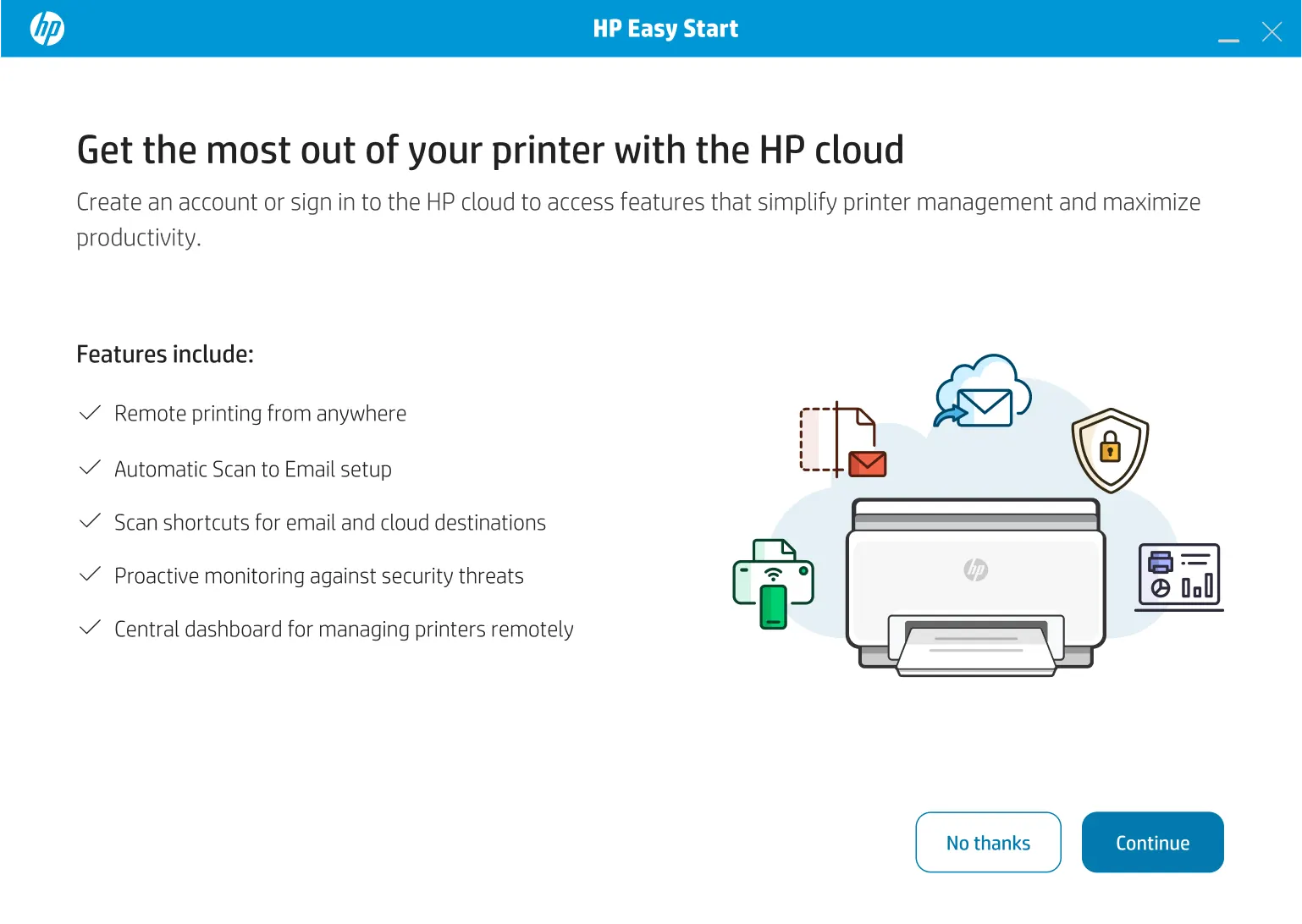
We moved the Cloud Value Prop upstream directly into the installer to capitalize on the simple authentication.
The original web flow design was repurposed as second chance for users who skipped the installer offer.
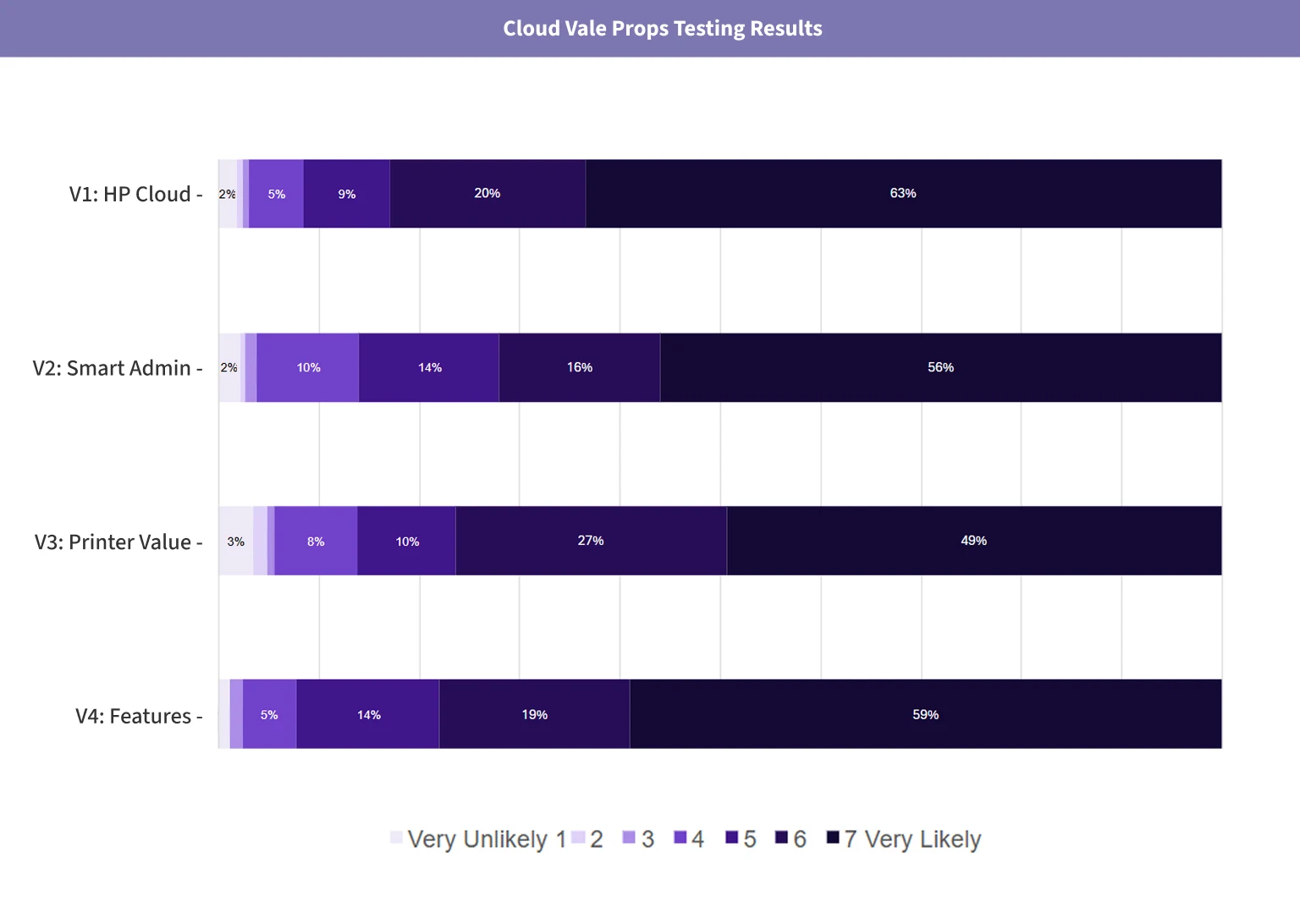
Testing variants of the cloud value prop in the installer led to a 63% cloud adoption.
To target admins effectively, the team introduced a role-based segmentation step. This strategic split was the foundation for the work below, allowing us to present the cloud and AI offer without adding noise to the end users.
We replaced the sequential opt-in with a parallel flow. Users now complete cloud onboarding during the idle waiting time while the driver installs in the background.

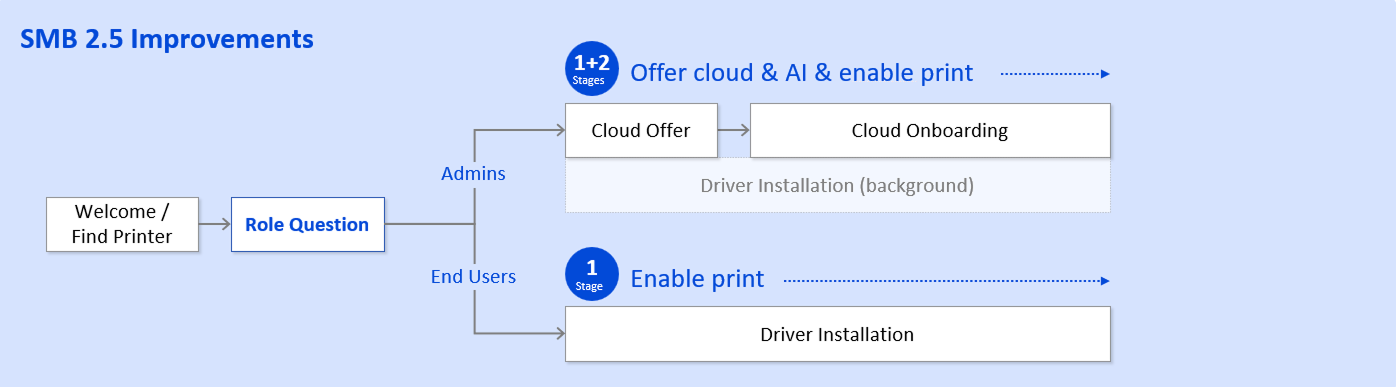
I replaced static text with dynamic animations that played during the installation wait time. This educated the user on why the cloud mattered without requiring them to read heavy copy.
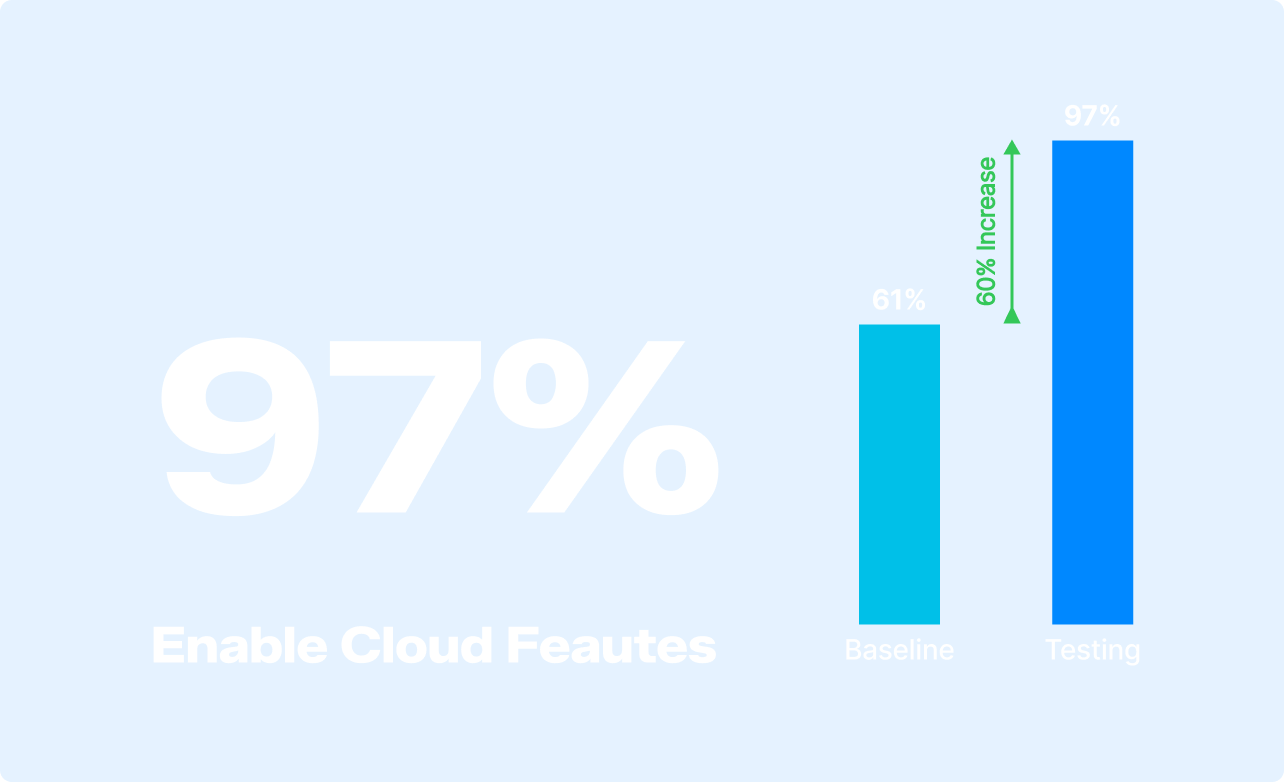
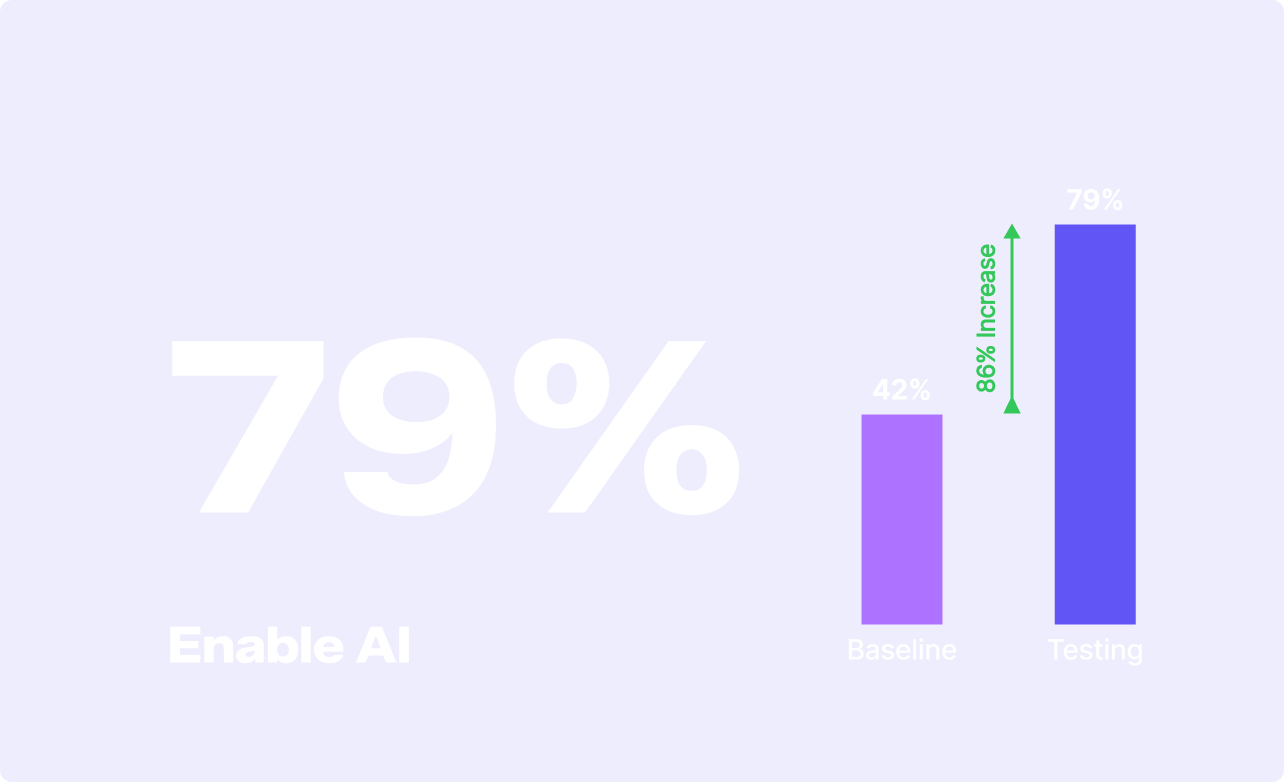
When the 97% target was announced, it honestly felt impossible. But that shock forced us to abandon safe, incremental improvements and completely rethink the architecture. We couldn't have built this if the goal had been reasonable.
We didn't need a design concept but a solution ready for the spring release. Balancing the ideal vision with the reality taught me that technical feasibility isn't just a blocker, it also grounded the design work. I'm glad that we delivered a solution that will actually ship on time.
This project was never a straight line. Requirements shifted, scopes changed, and we had to pivot constantly. However, despite the constant back-and-forth, we landed on a solid solution. It was a lesson in patience: learning to keep moving forward even when the destination kept changing.